
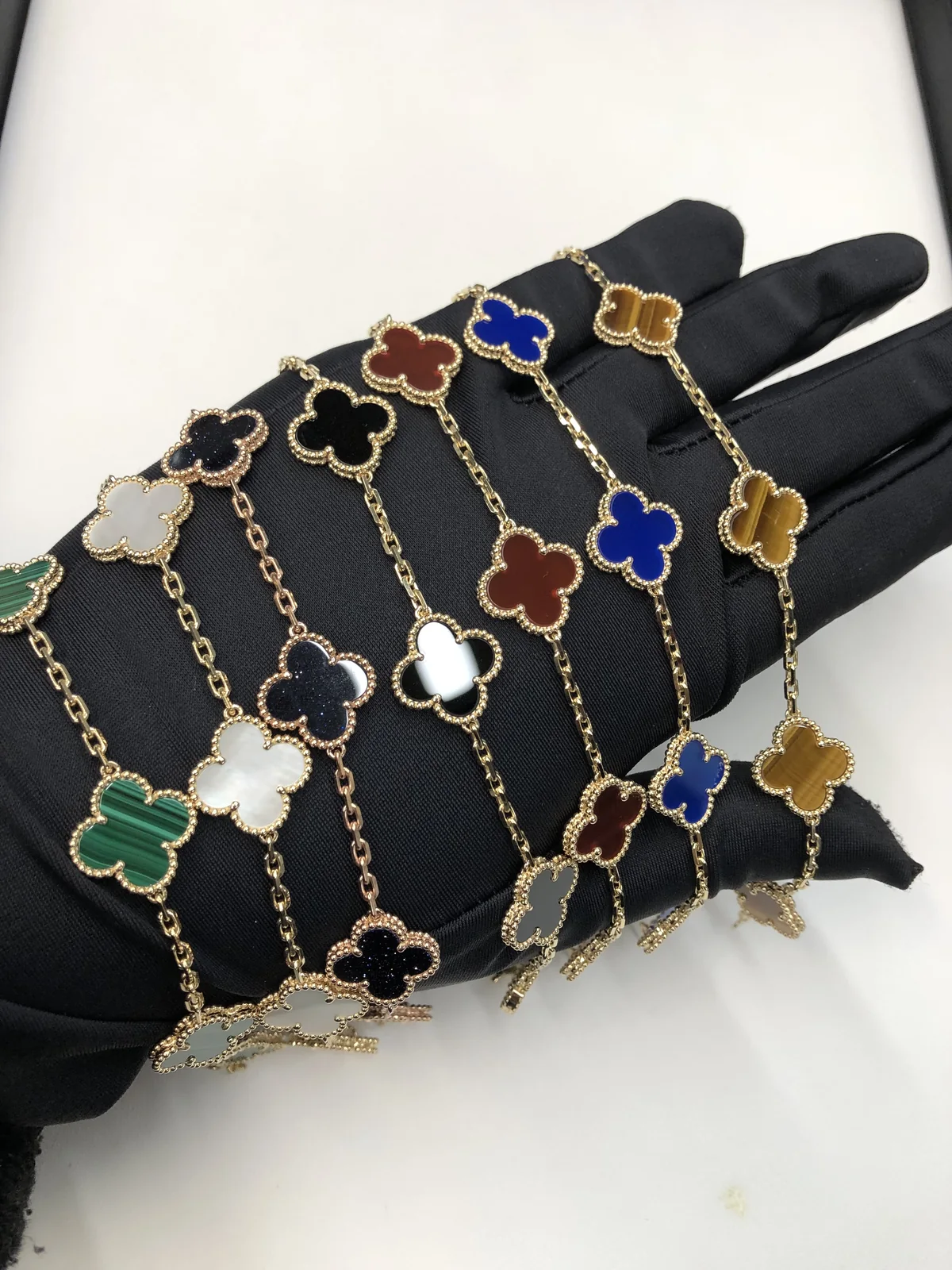
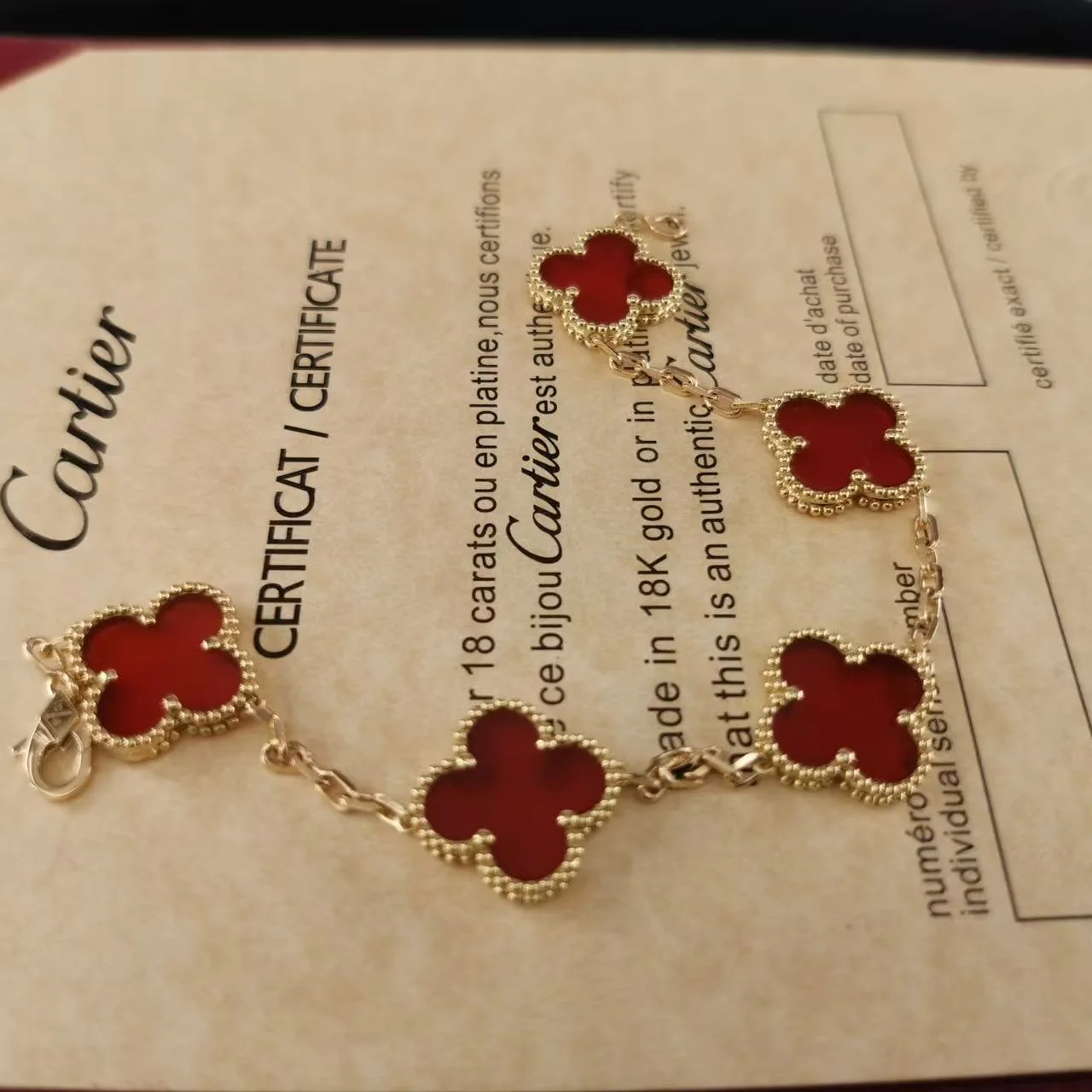
Short answer: two Vintage Alhambra-style five-motif bracelets can both weigh about 11–12 grams and still contain very different amounts of gold. In two versions inspected by our workshop, the premium construction contained approximately 9.2 g of gold, while the lightweight construction contained approximately 5 g. The remaining weight was made up differently inside the motifs—one used a single piece of natural stone, while the other used two thin stone faces around a much thicker cubic-zirconia core.
This matters because the price difference is not just a seller’s markup. It can reflect nearly twice as much gold, a different stone construction and a stronger or weaker setting. A finished bracelet may hide all of those differences.
Scope and disclosure: This guide discusses aftermarket bracelets inspired by the Van Cleef & Arpels Vintage Alhambra design. Justes is independent and is not affiliated with or endorsed by Van Cleef & Arpels. Brand names are used only to identify the design being discussed. The weights below are workshop observations from the compared samples, not universal specifications for every bracelet or stone variation.
Why bracelet weight has become such a confusing quality signal
Weight is one of the first numbers buyers ask for because it feels objective. But gross weight is only the combined weight of the chain, gold frames, clasp and every stone or filler inside the five motifs. It does not tell you how those grams are distributed.
This is exactly why the subject keeps appearing in current Reddit jewelry-rep discussions. Buyers compare 10 g, 11.5 g, 15 g and heavier versions, ask for scale videos, and debate whether a lower price reflects thinner gold, hollow construction or different materials. One recent discussion described a lighter interior construction that had been disclosed to the buyer; another side-by-side thread noted that higher-tier bracelets felt more substantial while a lower-tier onyx bracelet still had a total weight of 11.5 g. These are community observations, not standardized specifications, but they reveal the same buyer problem: gross weight by itself is not enough.
For reference, the official Van Cleef & Arpels product page identifies its Vintage Alhambra five-motif carnelian bracelet as 18K yellow gold with carnelian, but it does not provide one universal weight that buyers can apply to every length and stone variation. Stone type, motif construction, bracelet length and removed links can all affect the final number.
Our workshop comparison: the same 11–12 g, two very different builds
The table below summarizes the two constructions we inspected. The key comparison is not “heavy versus light.” Both finished bracelets can land in the same 11–12 g range. The difference is where the weight comes from.
| What we compared | Premium / top-quality construction | Light-gold construction |
|---|---|---|
| Finished bracelet weight | Approximately 11–12 g | Approximately 11–12 g |
| Gold portion in inspected sample | Approximately 9.2 g | Approximately 5 g |
| Motif insert | One whole piece of natural stone per motif | Two thin natural-stone faces with a thick cubic-zirconia core between them |
| How the total weight is reached | More of the weight comes from the gold construction | More of the weight comes from the thicker layered motif insert |
| Frame profile | Fuller gold frame with more metal available around the setting | Thinner gold frame paired with a taller, heavier insert |
| Likely wear trade-off | More metal supports the motif and gives the prongs a stronger working section | Thin prongs must hold a thick insert, increasing the risk of lifting or opening with wear |
| Why the price is different | More gold and whole natural-stone pieces | Less gold and a lower-cost layered stone assembly |
The important number is therefore net gold weight, not gross bracelet weight. If two offers both say “11–12 g,” ask how many grams are gold and what is inside each motif.
Whole natural stone versus a “sandwich” motif
In the premium sample, each colored motif is cut from one continuous piece of natural stone. The same piece runs through the thickness of the visible insert. Natural stone may show normal variation in shade, translucency, veining or pattern; that variation is part of the material rather than a defect.
In the lightweight sample, the motif is layered. A thin natural-stone slice is placed on the front, a second thin slice is placed on the back, and a much thicker cubic-zirconia core sits between them. Once the motif is closed inside its gold frame, the two stone faces are what the buyer sees. The core is hidden.
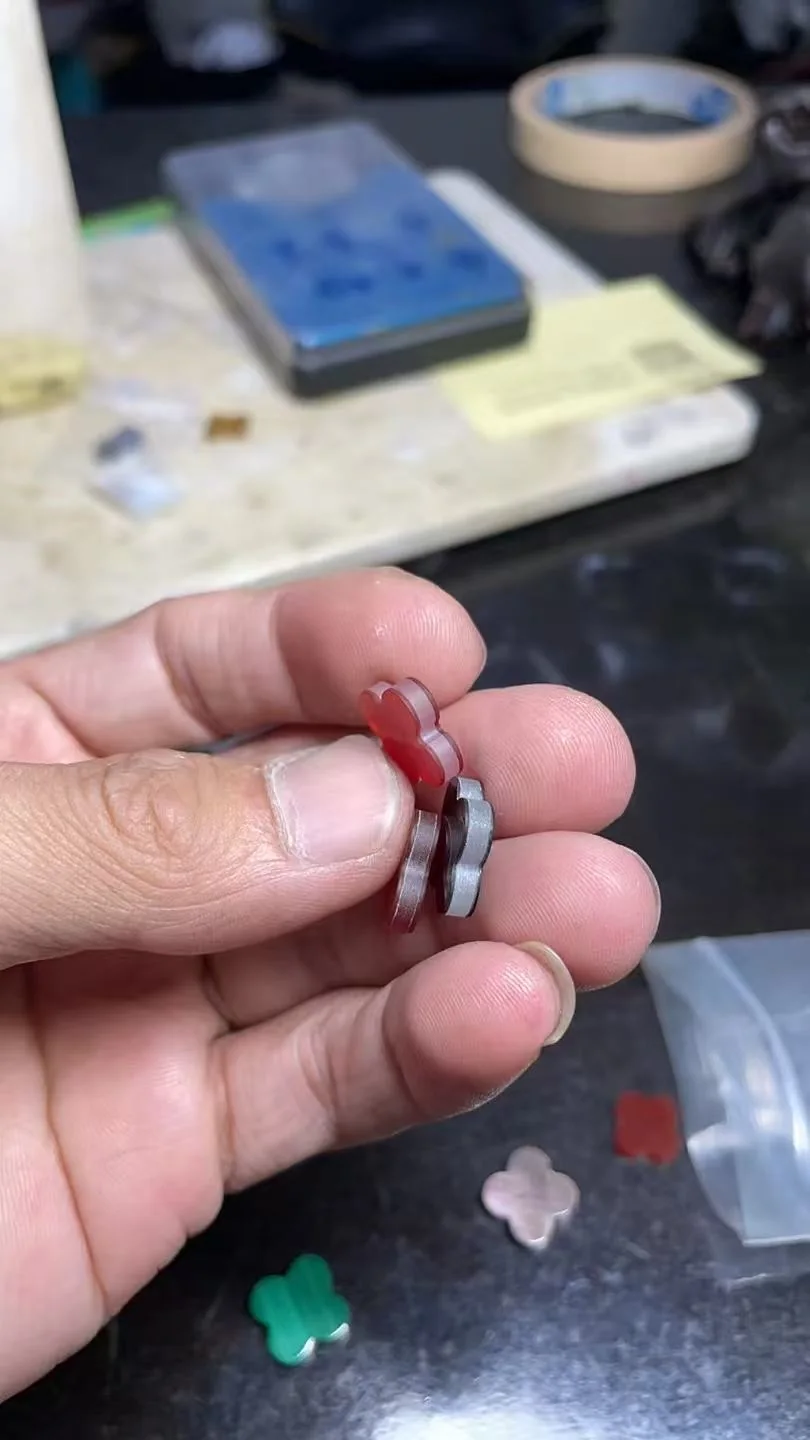
That is why photos of the front and back can be misleading even when the photos are real. The layered insert can look convincing after assembly. A side-profile macro image may reveal an unusually tall setting, but in many cases the internal difference cannot be confirmed without opening the frame.
Why the light-gold version can have a thicker frame but weaker retention
At first glance, “thicker” sounds stronger. Here it means the completed motif sits taller because the layered insert is thick—not that the gold walls contain more metal.
When the gold allocation drops from approximately 9.2 g to approximately 5 g in an otherwise similar five-motif bracelet, the manufacturer must save metal throughout the chain, frame and setting. The frame can therefore be thin while still surrounding a bulky insert. The prongs have less gold cross-section to bend over and secure the stone assembly.
With movement, knocks and repeated wear, a thin prong can gradually lift or spring open. If several prongs lose tension, the complete layered insert may come out. This does not mean every lightweight bracelet will fail, and wear habits matter, but the construction leaves less safety margin than a fuller frame around a one-piece stone.
Logos and total weight do not prove material quality
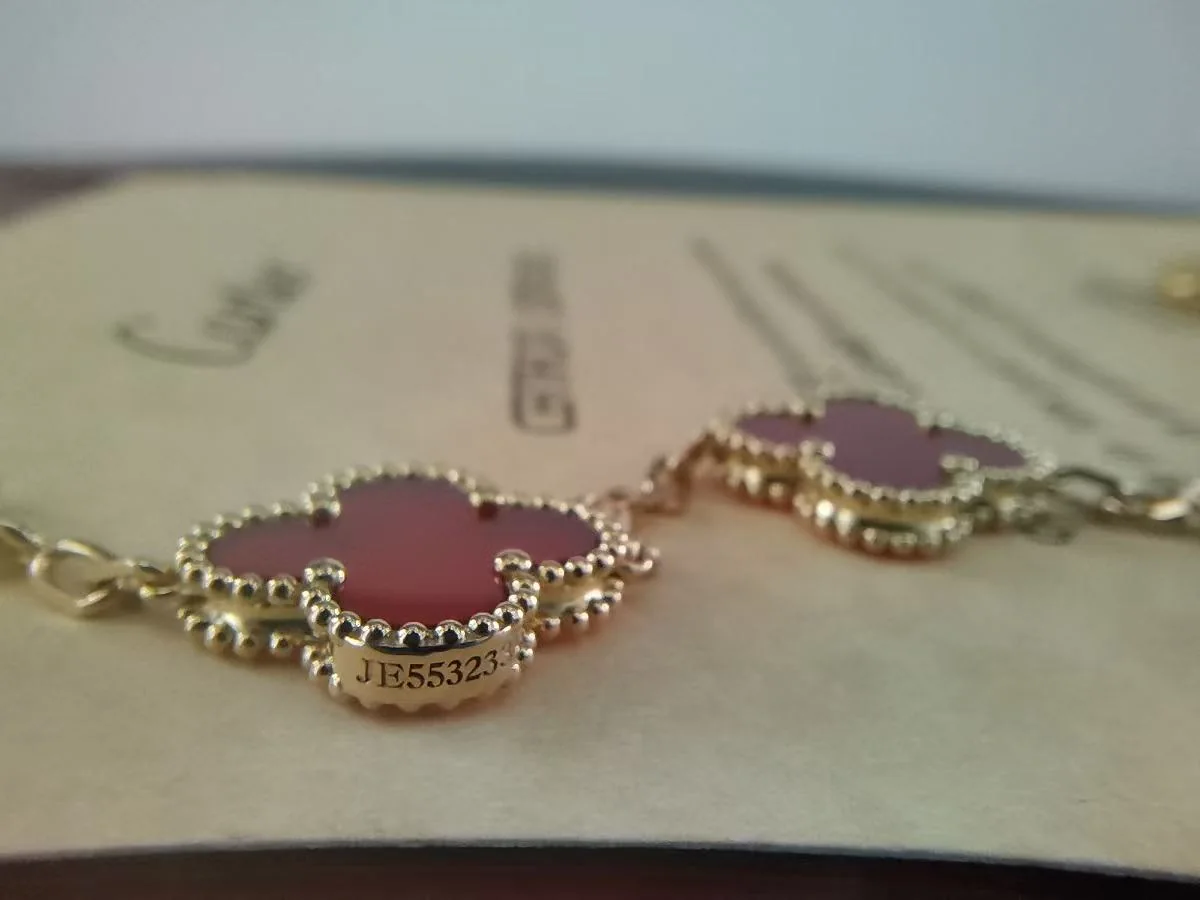
Clean engraving, a familiar clasp and a polished beaded border are visible finishing details. They can help you judge workmanship, but they cannot confirm how much gold is in the bracelet or whether the motif contains one stone or three layers.
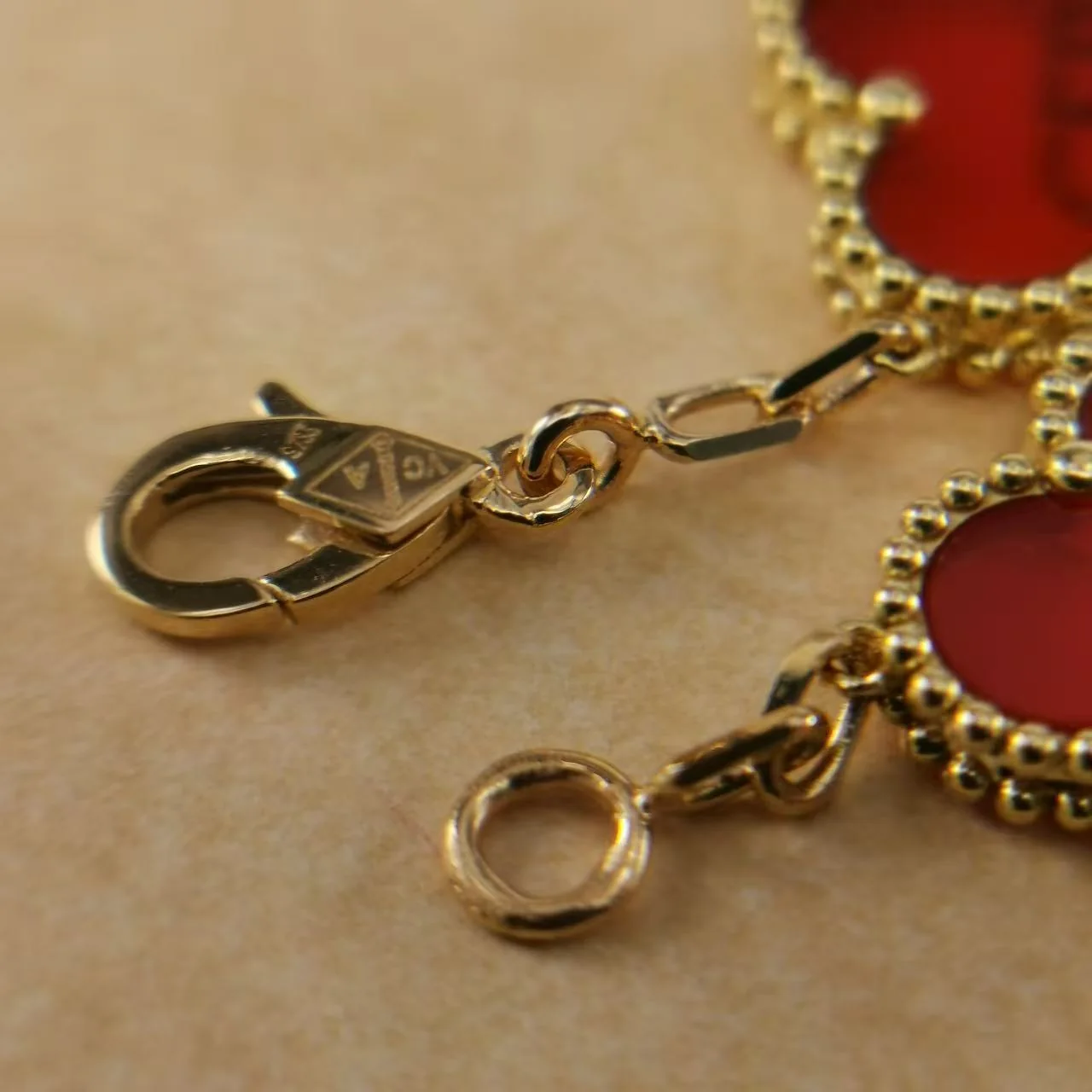
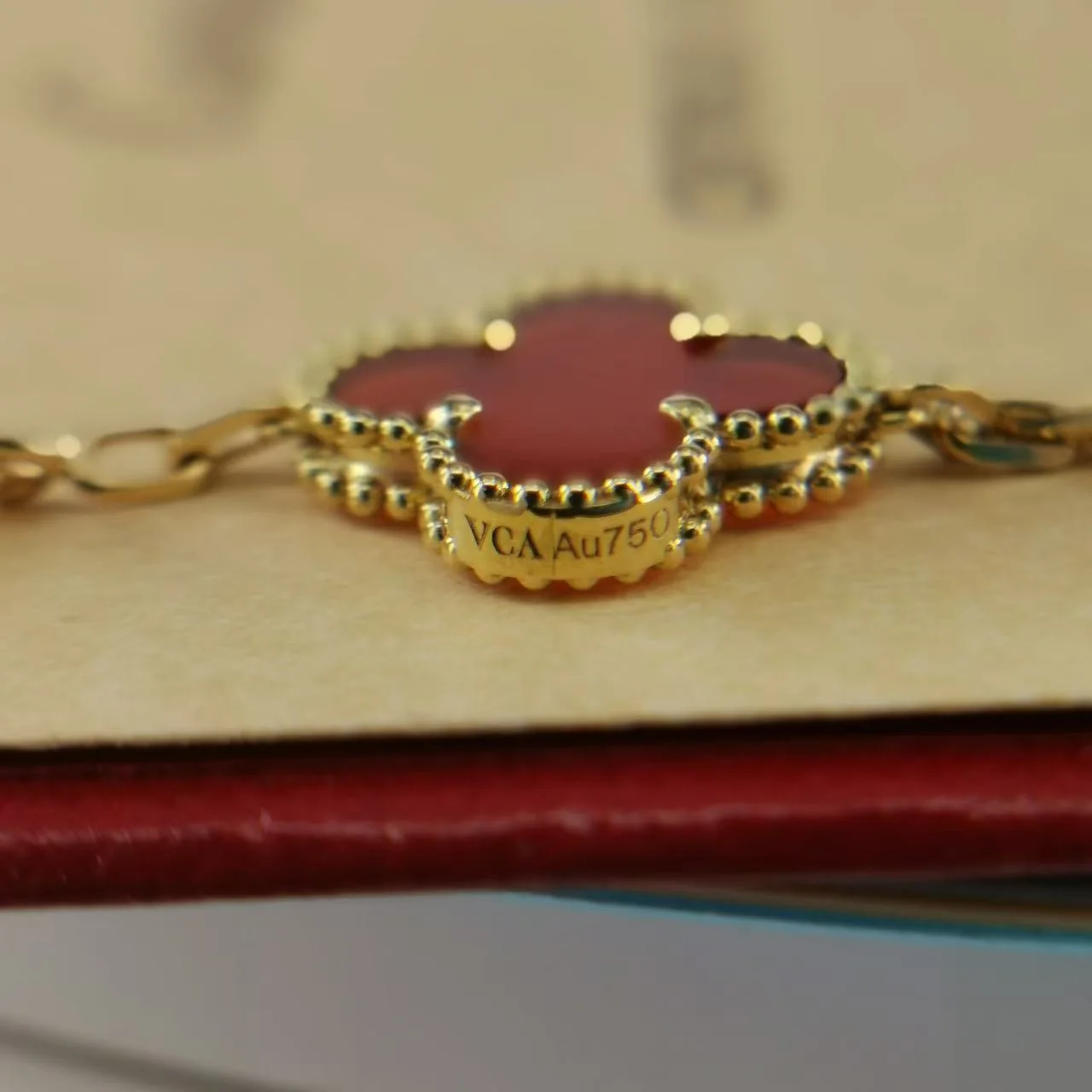
An “Au750” or “18K” mark refers to the claimed fineness of the gold component. It does not tell you the number of gold grams in the finished bracelet. Similarly, a scale reading of 11.5 g does not prove that 11.5 g is gold. The stones, filler and other non-gold parts are included in the reading.
What to ask before comparing prices
When one seller’s price is much lower, do not begin by asking which seller is overcharging. First make sure both quotes describe the same product.
- What is the finished total weight? Ask for the bracelet length and whether links were removed before weighing.
- What is the approximate net gold weight? The answer should exclude stones and non-gold inserts.
- Is each motif one continuous natural stone? If not, ask for the exact layer structure and filler material.
- Can you provide a side-profile macro photo or video? The frame height, prongs and chain thickness should be visible.
- Which natural stone is being used? Carnelian, onyx, malachite, tiger’s eye and mother-of-pearl have different densities and natural visual characteristics.
- How is the gold claim checked? A seller’s scale video is useful for weight, but an independent jeweler can test metal fineness after delivery.
- What happens if a prong opens or a motif falls out? Ask about inspection, repair and stone-replacement support before ordering.
- Is the lower-cost construction clearly disclosed on the invoice or chat? A budget version can be a valid choice when the buyer understands the trade-off.
Is the lightweight version always a bad purchase?
No. A lower-gold version can make sense for a buyer who prioritizes appearance and a lower price, wears the bracelet occasionally, and accepts the construction and repair trade-offs. The problem is not that different quality levels exist. The problem is selling them as though they are materially identical.
A responsible seller should explain, in plain language, whether the bracelet uses a whole natural stone or a layered motif, approximately how much gold is present, and why the cheaper version costs less. Once those facts are disclosed, the customer can choose based on budget and intended wear.
How Justes quotes these bracelets
When you request a quote from Justes, ask us to state the construction level, approximate finished weight, approximate gold weight for the ordered length, stone type and motif construction. You can also review our Alhambra jewelry collection and Alhambra bracelet options before sending your preferred color and wrist size.
If you want us to compare a quote you received elsewhere, send the total weight, stated gold weight, stone material and side-profile photos through our contact page. We can explain whether the offers are genuinely comparable before you decide.
Frequently asked questions
Can two 11–12 g Alhambra-style bracelets contain different amounts of gold?
Yes. Gross weight includes the stones and any hidden filler. In the two constructions inspected here, both finished bracelets were around 11–12 g, but the gold portions were approximately 9.2 g and 5 g.
Can I identify a sandwich stone from finished photos?
Usually not with confidence from front and back photos alone. A tall side profile can be a warning sign, but the definitive difference may remain hidden until the motif is opened.
Does an 18K stamp prove how much gold is in the bracelet?
No. A stamp is a fineness claim, not a weight statement. Ask for net gold weight and consider independent testing after delivery.
Why does a lightweight motif have a higher risk of stone loss?
The inspected lightweight construction used a thin gold frame to hold a thick layered insert. That leaves less metal in the prongs to maintain pressure over time, so lifting or opening is more likely if the bracelet is knocked or worn heavily.
Is there one correct weight for every Vintage Alhambra five-motif bracelet?
No. Bracelet length, number of links, stone type and construction all change total weight. Compare like with like and ask for both gross and net-gold figures.
Why are prices so different between sellers?
Price can reflect gold quantity, natural-stone usage, setting construction, finishing, labor, quality control and after-sales support. A low price is not automatically dishonest, but the material difference should be disclosed.
The bottom line
Do not use total bracelet weight as a shortcut for quality. An 11–12 g reading can describe a gold-rich bracelet with whole natural-stone motifs or a light-gold bracelet whose thicker layered inserts replace much of that metal weight. Ask for net gold weight, exact motif construction and a clear side profile. Once those three facts are known, the price difference usually becomes much easier to understand.
Community references: Reddit discussion about weight and disclosed interior construction; Reddit low-tier versus high-tier side-by-side discussion. Official material reference: Van Cleef & Arpels Vintage Alhambra five-motif carnelian bracelet.