
Rarity is part of a gemstone’s appeal, but it does not provide a reliable price ranking. When considering jewelry such as a fake panthere de cartier ring, ask about the specific stones and their quality rather than relying on a gem name alone.
There is no single most valuable stone in every size and quality. GIA explains that colored gemstone value depends on several factors, including color, clarity, size and cutting quality. The ten examples below introduce notable gems and their characteristics; their order does not indicate a global rarity or price ranking.
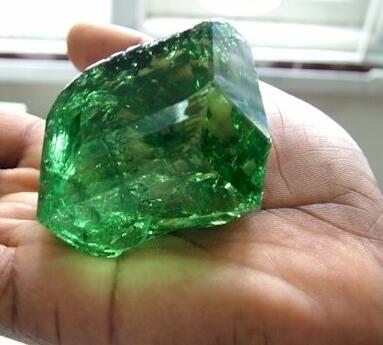
Faceted green stone
Poudretteite
Poudretteite was first known from Mont Saint-Hilaire in Quebec. GIA documented a gem-quality example from the Mogok Valley, found in 2000, expanding the story beyond the Canadian locality.
Tanzanite
Tanzanite is the violet-blue variety of zoisite, not sapphire. Its commercial source is the Merelani Hills of Tanzania, as described in GIA’s tanzanite guide. A limited source alone does not establish a dependable date when supplies will run out.
Benitoite
Benitoite is known for its blue color and was discovered in California in 1907. GIA’s historical reading list also records its bright blue fluorescence under short-wave ultraviolet light.
Grandidierite
Grandidierite is a blue-green mineral, with gem-quality material documented in Madagascar and Sri Lanka. It can show different colors when viewed in different directions, a property called pleochroism; see GIA’s examination of grandidierite.
Black Opal
Black opal shows play-of-color against a black or dark background, as explained in GIA’s opal guide. The term identifies an opal type, rather than guaranteeing that every example is more valuable than every other opal.
Red Beryl
Red beryl has been documented in Utah and New Mexico. The Ruby Violet locality in Utah’s Wah Wah Mountains is noted for gem-quality material in the Utah Geological Survey’s account of red beryl.
Jadeite
Jadeite occurs in several colors, with fine vivid green, translucent examples particularly prized. GIA identifies color, transparency and texture as its principal quality factors; a specific piece needs to be assessed on its own characteristics.
Taaffeite
Taaffeite is named after Richard Taaffe, who recognized an unusual faceted stone in Dublin in October 1945. This discovery is described in GIA’s study of taaffeites.
Alexandrite
Alexandrite is a color-changing variety of chrysoberyl. It can appear green in daylight and red under incandescent light, as illustrated by GIA’s alexandrite guide. The strength and appearance of the color change vary between stones.
Painite
Painite is a rare mineral documented in the Mogok region of Myanmar in GIA’s field account. Historical statements about only two known crystals should not be read as a current inventory or a universal value ranking.
When choosing a piece such as the replica cartier juste un clou bracelet in gold 18k, ask for its exact gemstone details and current photos. The stone used in a particular design matters more than a general rarity list.