
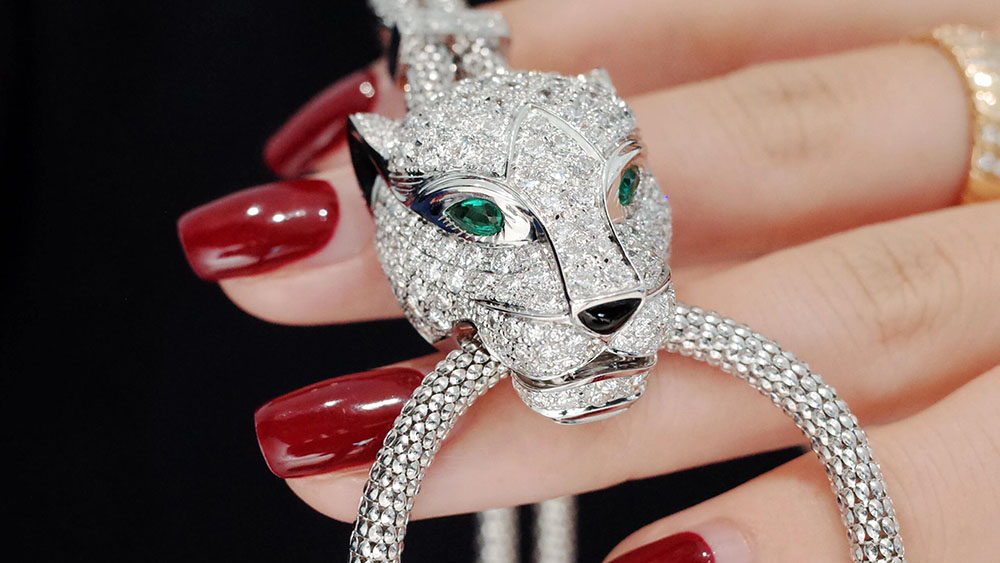
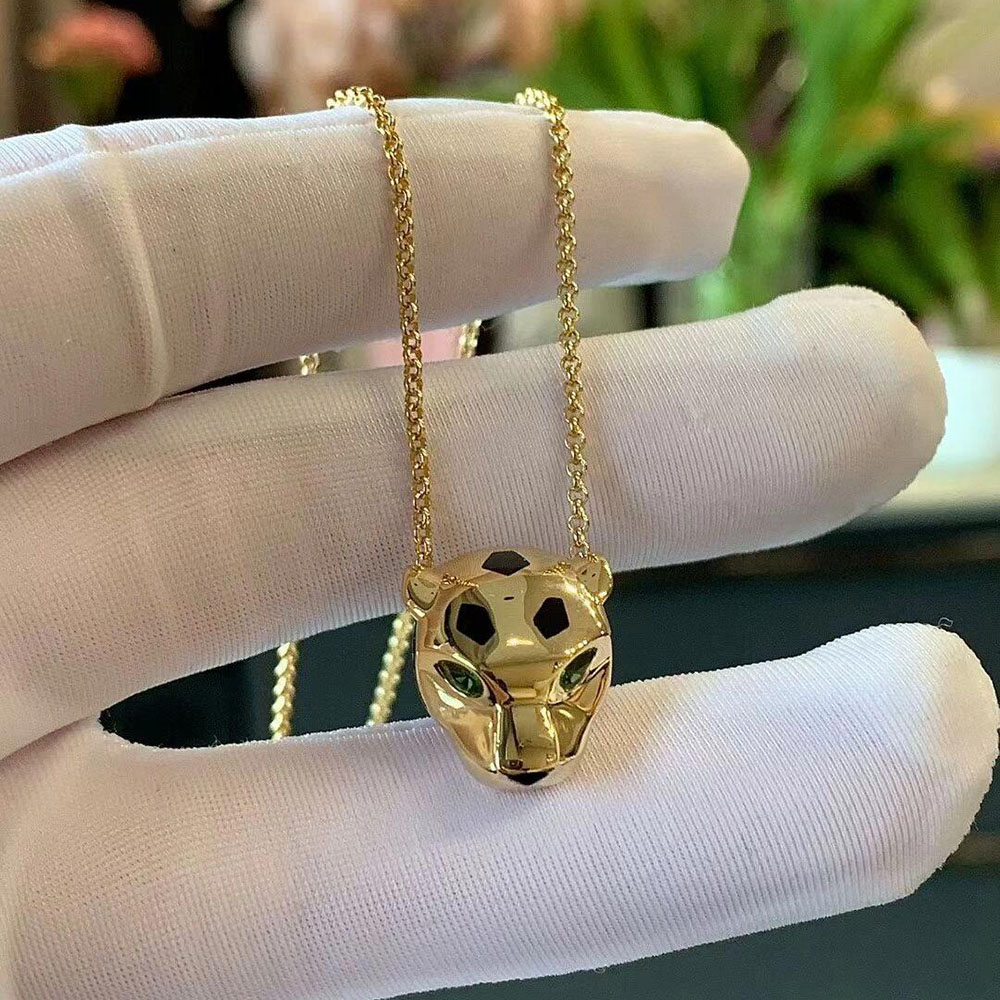
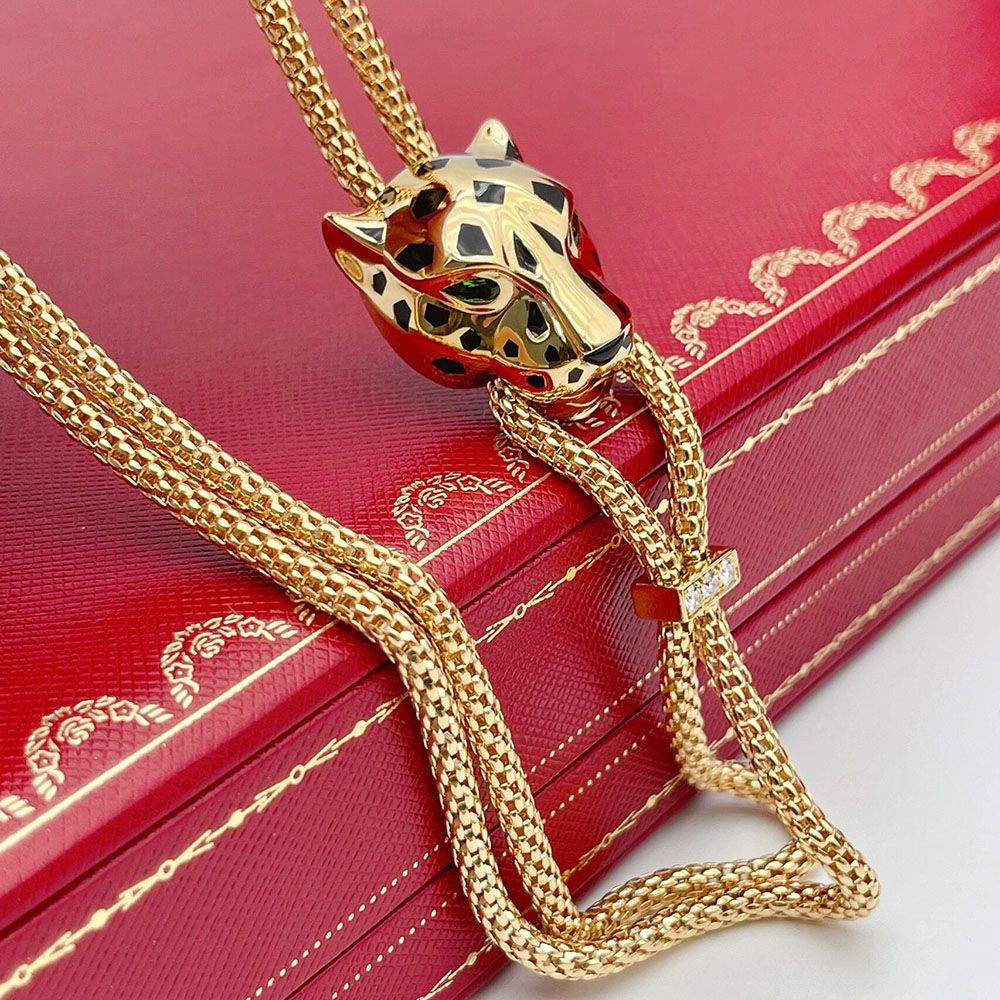
The spotted feline motif often described as Cartier’s leopard design is officially known as Panthère de Cartier. Its identity draws on both the animal’s form and its spotted surface. If the 18K Yellow Panthère de Cartier necklace interests you, review its Justes listing for the individual item’s specifications and detailed images.
1. Origins of the Panthère Motif
Cartier’s feline imagery has roots in its early twentieth-century work. A spotted pattern can suggest the animal without depicting its whole body, while a sculptural figure gives the motif a different presence. This distinction helps explain why a leopard-like pattern and a panther-shaped jewel can belong to the same design language.
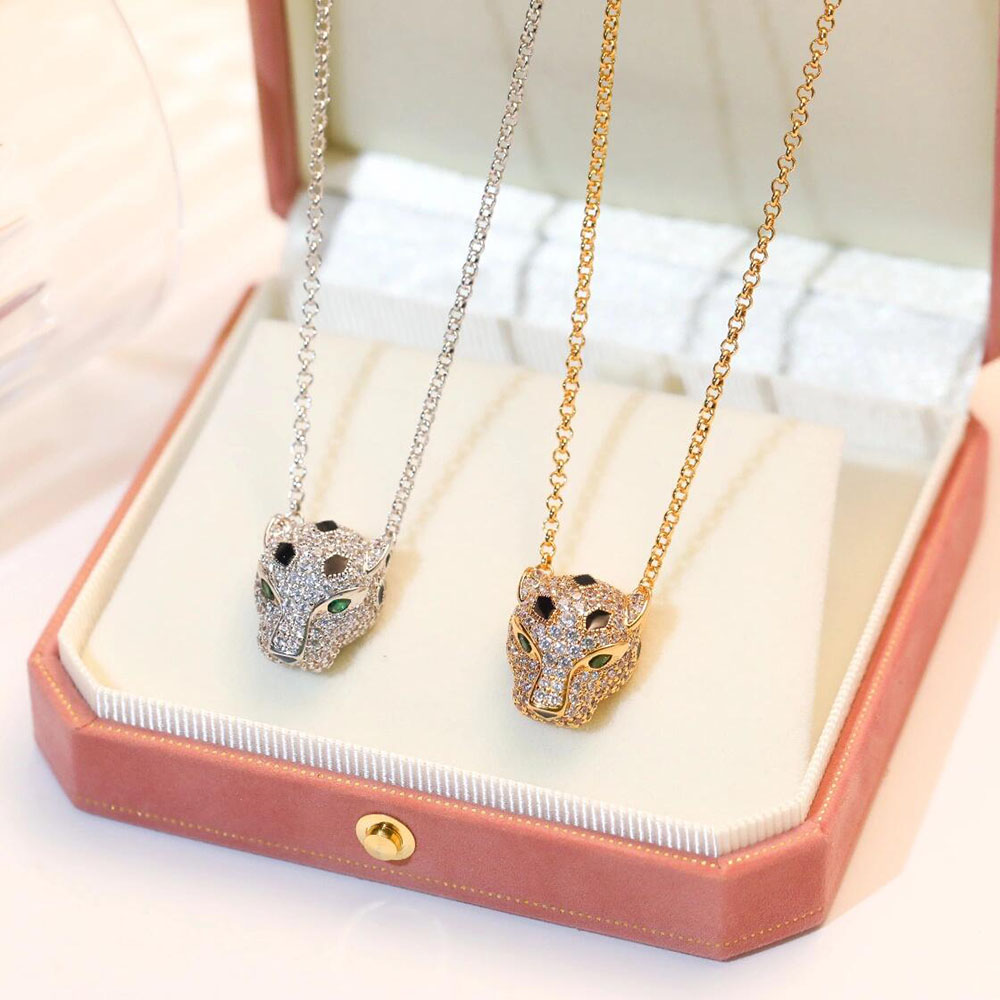
Cartier dates the first appearance of the panther motif to a 1914 wristwatch with a panther-skin pattern. The spotted surface evokes the animal without showing its whole body. Looking at this early example helps explain how a recognizable feline identity can also take the form of a pattern.
2. Symbolism of the Feline
A feline motif can invite personal associations with movement, independence or quiet confidence. These are ways a viewer might interpret a design, rather than a single meaning shared by every culture or wearer. The shape, posture and surface pattern offer different details to notice when looking at a particular piece.
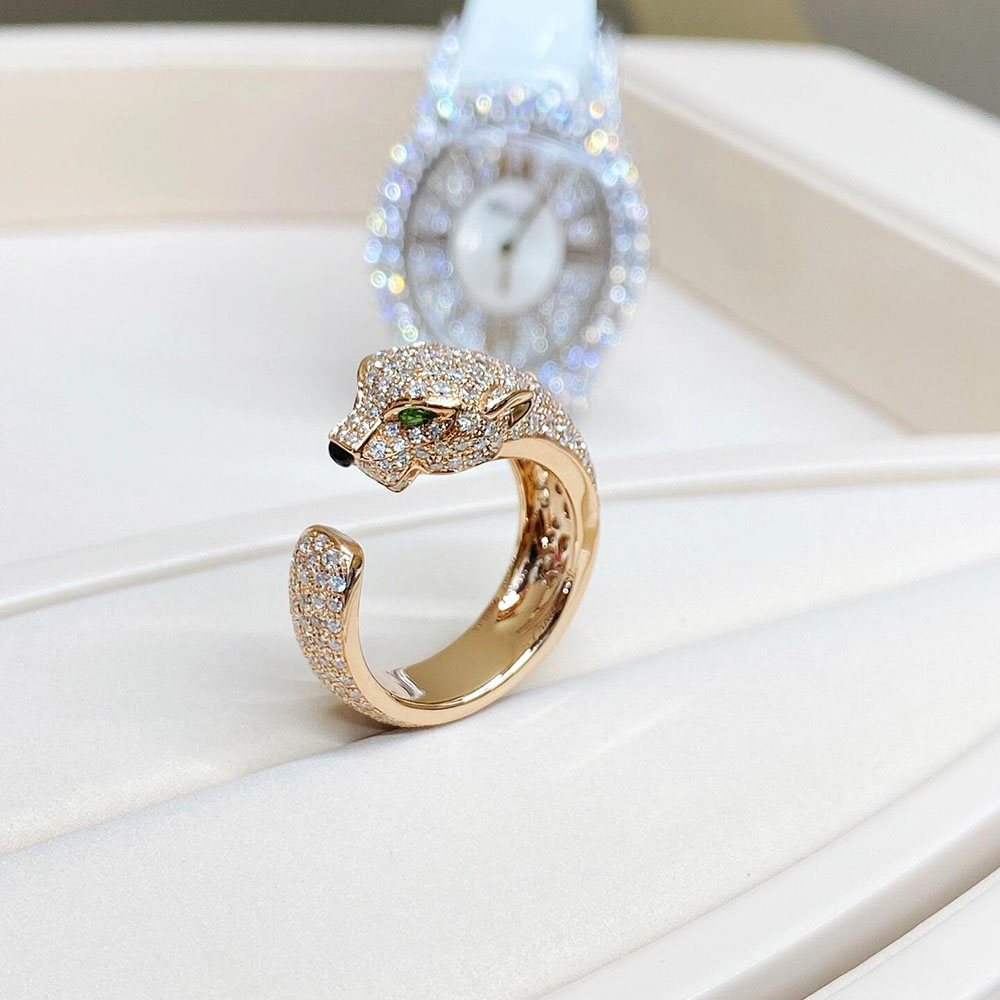
In its own account of the design, Cartier connects Panthère with power, freedom and strength of character. Those associations provide context for the motif. Individual wearers may still find their own meanings in the feline shape and the way a particular jewel expresses it.
3. The Distinctive Aesthetic
Feline jewelry can be read through its spotted surface, curved body, eyes and posture. In Panthère de Cartier, the motif appears in recognizable animal forms as well as stylized patterns. The materials and settings belong to each individual creation; the collection name does not establish the specifications of every piece shown or linked in this article.
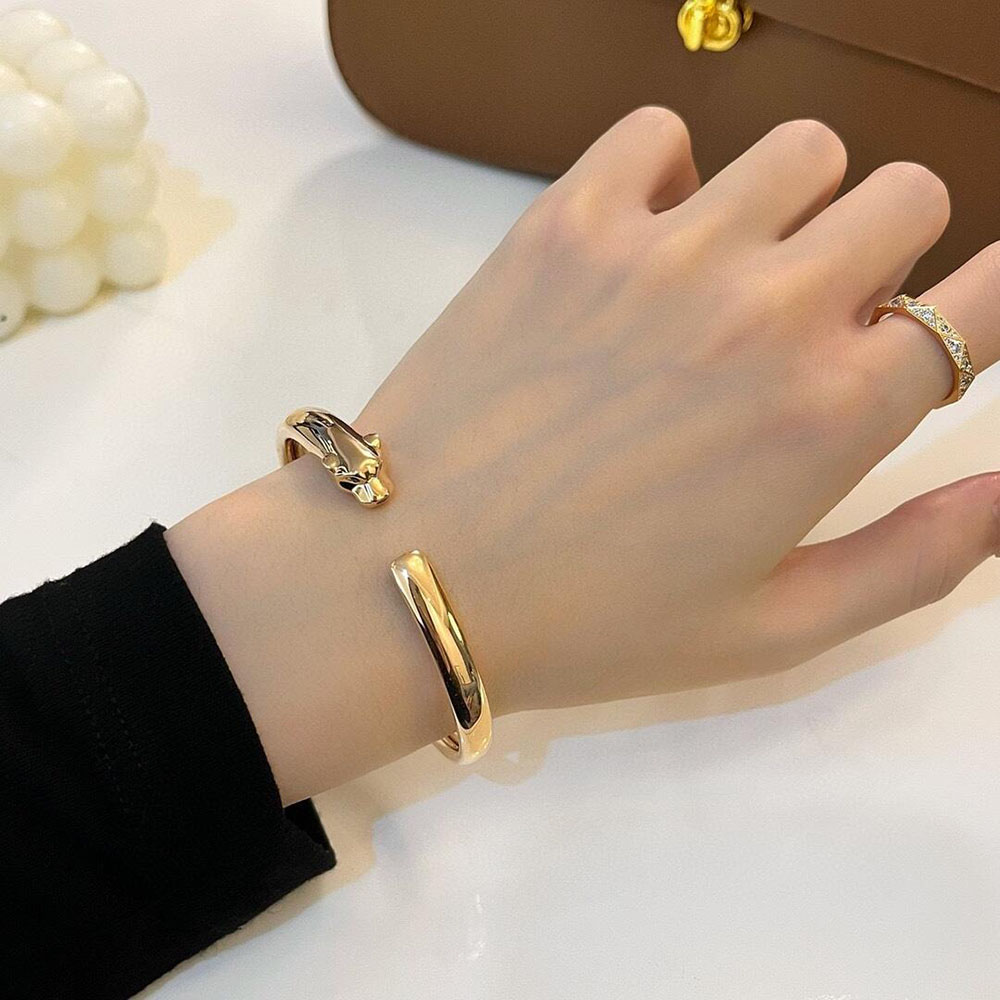
When comparing feline designs, notice how the spots and contrasting surfaces define the body. A resting pose, a curved neck or a more geometric outline can change the impression of a piece. Looking closely at these details is more useful than assuming that all spotted-cat jewelry uses the same stones, construction or design approach.
4. Personal Meaning and Individuality
The association with independence can make a feline motif appealing as a personal emblem. A wearer may choose it for its meaning, its sculptural shape or simply the way it works with other jewelry. Those choices are individual; the design does not prescribe a particular identity for the person wearing it.
Consider how the motif fits your own style: a small feline detail can provide a subtle accent, while a larger figure may become the focus of an outfit. Scale, proportions and placement can matter as much as symbolism when deciding which design you enjoy.
5. Different Interpretations of the Feline
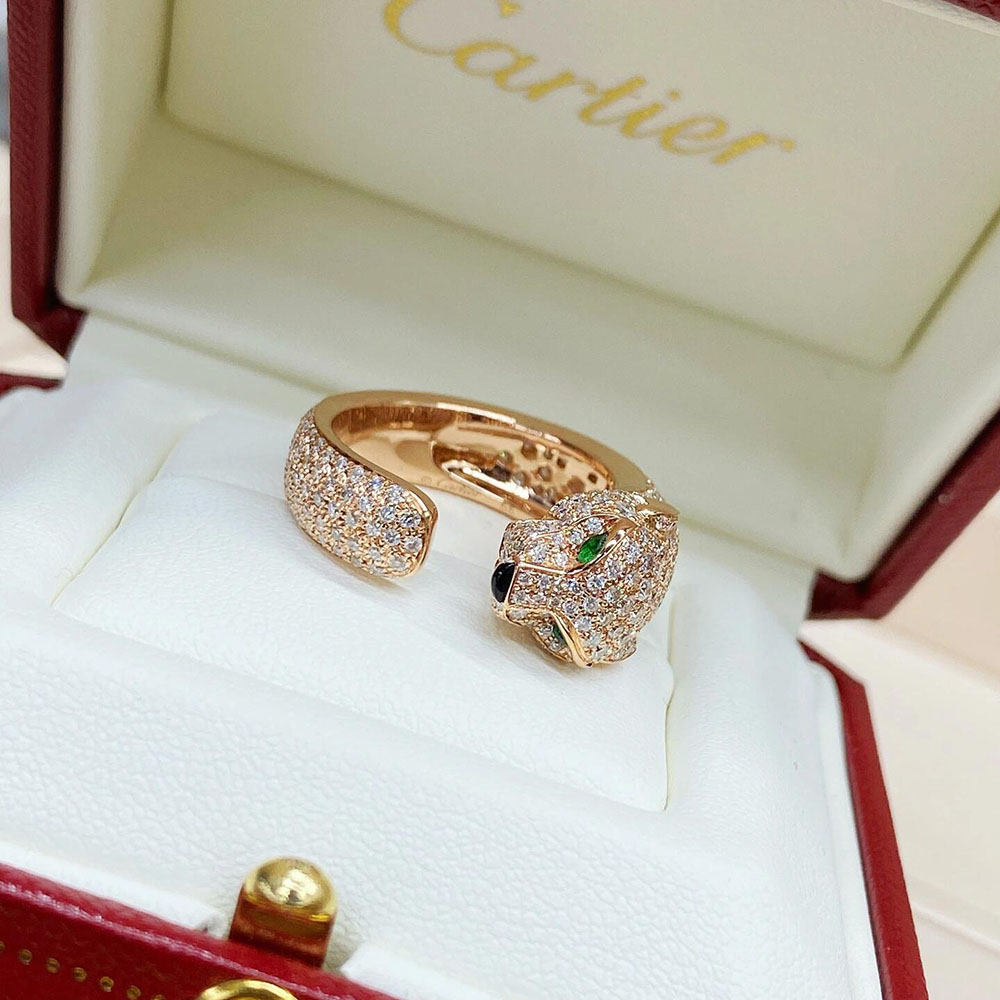
Cartier describes naturalistic, abstract and graphic approaches to the panther. Each emphasizes a different part of the feline identity. The early patterned watch is a useful reminder that a feline design need not take the form of a complete animal.

These different approaches give jewelry lovers several ways to engage with a feline motif. You might prefer a recognizable face and body, a repeated spot pattern or a simplified outline. Comparing individual designs makes those differences clearer than treating every leopard-like detail as the same style.
6. The Power of the Panther
Panthère de Cartier brings together a spotted feline identity and several ways of expressing its form. Its official associations with power and freedom provide context, while a viewer’s own response remains personal. When exploring related jewelry, look at the specific design and materials of the item that interests you.
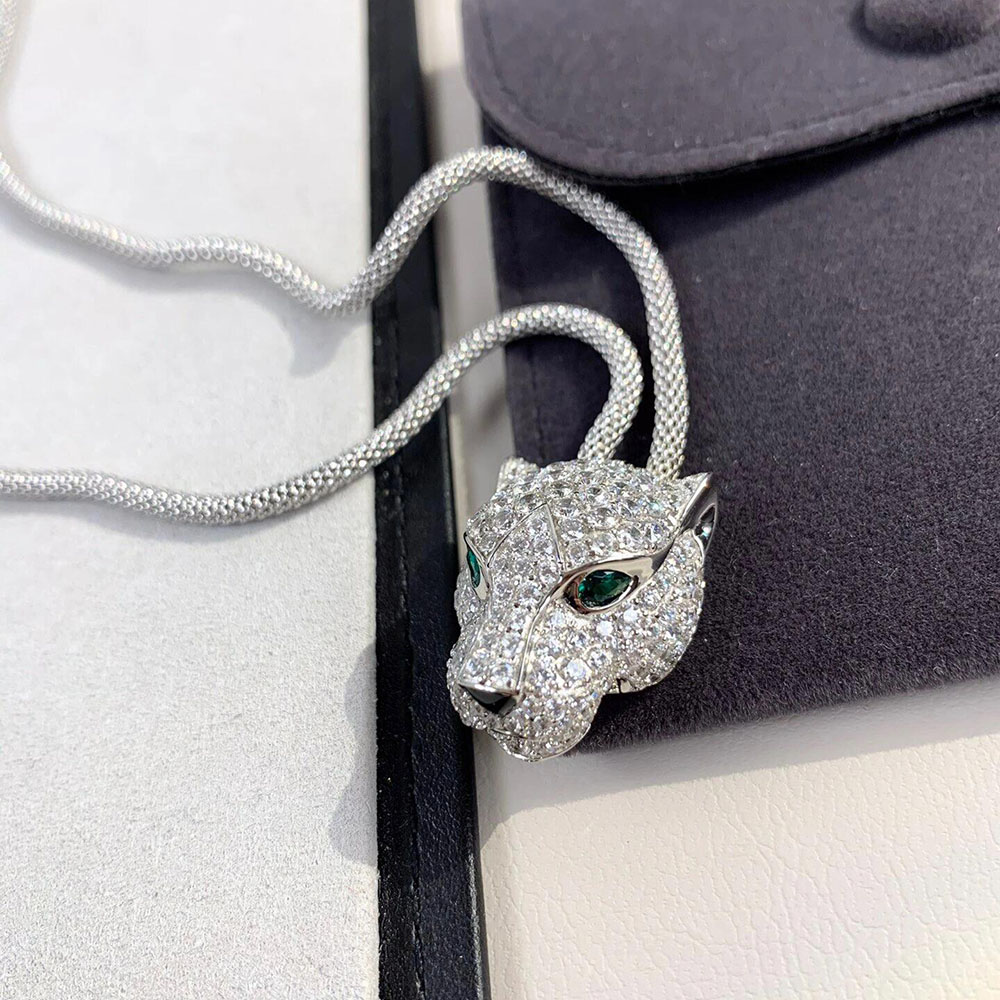
If you are also interested in the Cartier Leopard design, please contact us to send you more detailed drawings.